Canada Research Chair on Youth, Disasters and Social Justice

Published on 13 February 2022

Stressed and distressed: How is the COVID-19 pandemic associated with sexual frequency, sexual satisfaction, and relationship satisfaction?

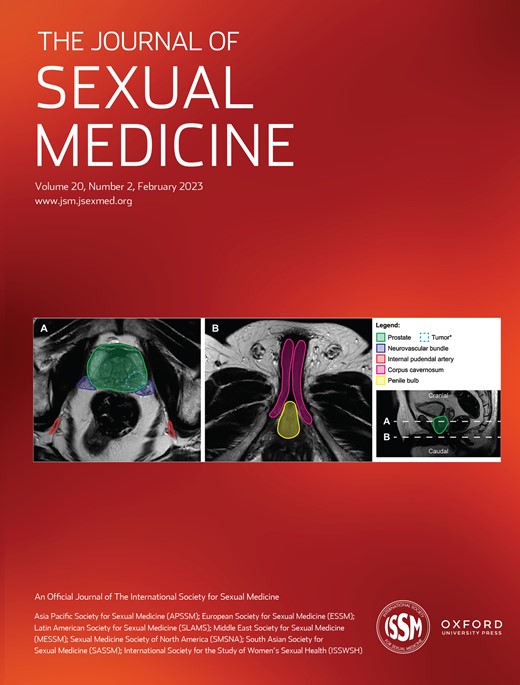
Journal of Sexual Medicine
 

The Canadian government’s response to the ongoing COVID-19 pandemic included the implementation of several restrictive measures since March 2020. These actions sought to decrease social contact and increase physical distancing, including that within universities. Such constraints were required to impede the transmission of the virus; however, concerns remain about their impact on the sexual and intimate relationships of university employees and students. This study examined the associations between COVID-19–related stress and sexual frequency, sexual satisfaction, and relationship satisfaction, also testing the mediating role of psychological distress.


Jacinthe Dion, Catherine Hamel, Benjamin Prévost, Christiane Bergeron-Leclerc, Eve Pouliot, Danielle Maltais, Josée Grenier, Myriam Dubé, Claudiane Ouellet-Plamondon et Marie-Pier Vaillancourt-Morel


How to cite this publication

Dion, J., Hamel, C., Prévost, B., Bergeron-Leclerc, C., Pouliot, E., Maltais, D., Grenier, J., Dubé, M., Ouellet-Plamondon, C., & Vaillancourt-Morel, M.-P. (2022). Stressed and distressed: How is the COVID-19 pandemic associated with sexual frequency, sexual satisfaction, and relationship satisfaction? Journal of Sexual Medicine, 00, 1-9. 

  • Jacinthe Dion

    Full professor in psychology (UQTR)
  • Christiane Bergeron-Leclerc

    Full professor in Social Work, UQAC
  • Eve Pouliot

    Professeure titulaire en travail social à l’Université du Québec à Chicoutimi (UQAC). Titulaire de la Chaire de recherche du Canada ZENITH
  • Danielle Maltais

    Professor Emerita of Social Work at UQAC

Related content